
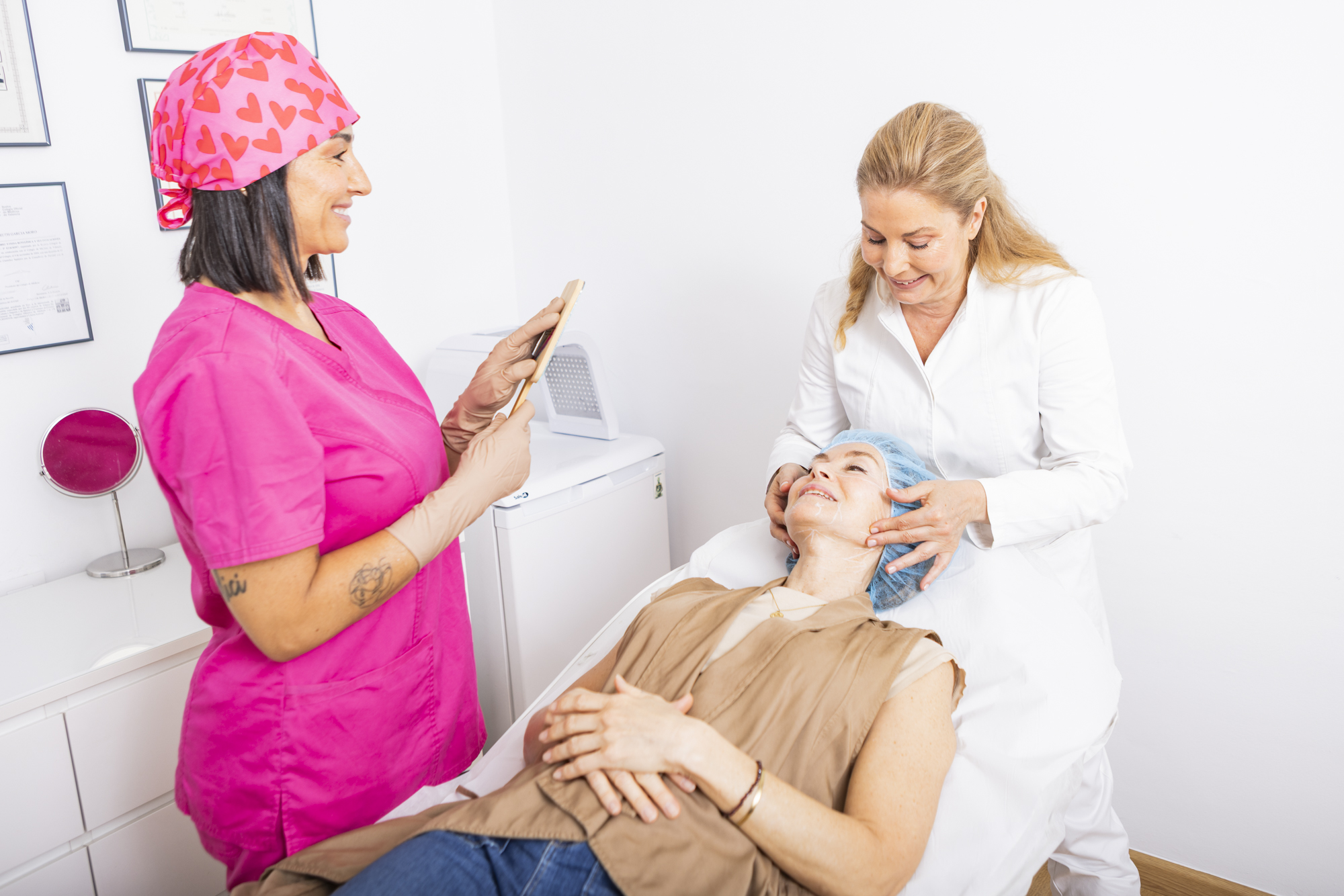
What does a chemical peel involve?
A chemical peel is a medical-aesthetic technique that consists of the controlled application of acid solutions to the skin to induce exfoliation of the superficial layers and stimulate cell renewal. The result is smoother, more even and more luminous skin.
Depending on the type and concentration of acid used, the peel can act at different depths: superficial (epidermis), medium (papillary dermis) or deep (reticular dermis). In facial aesthetic medicine, superficial and medium peels are the most widely used, offering an excellent balance between results and safety.
The most commonly used acids are glycolic acid (AHA), salicylic acid (BHA), mandelic acid, trichloroacetic acid (TCA) and combinations of several of them to obtain more complete results.
What can a chemical peel improve?
The chemical peel is a versatile treatment that addresses multiple skin concerns:
- Spots and hyperpigmentation: melasma, sun spots, post-inflammatory hyperpigmentation (acne marks).
- Acne and oily skin: salicylic acid is especially effective at regulating sebum production and treating acne lesions.
- Improved texture: smoother skin, less visible pores, reduced roughness.
- Superficial acne scars: improved appearance of shallow post-acne scars.
- Signs of ageing: softens fine lines and improves skin quality and luminosity.
-
Superficial peel (glycolic, mandelic acid): exfoliates the epidermis, ideal for dull, dehydrated skin or skin with mild hyperpigmentation. Minimal recovery time.
Medium peel (TCA 15-35%): reaches the papillary dermis, treats more marked spots, fine lines and superficial scars. Recovery of 5-7 days.
Salicylic acid peel: especially indicated for oily skin and acne, thanks to its keratolytic and sebum-reducing action. -
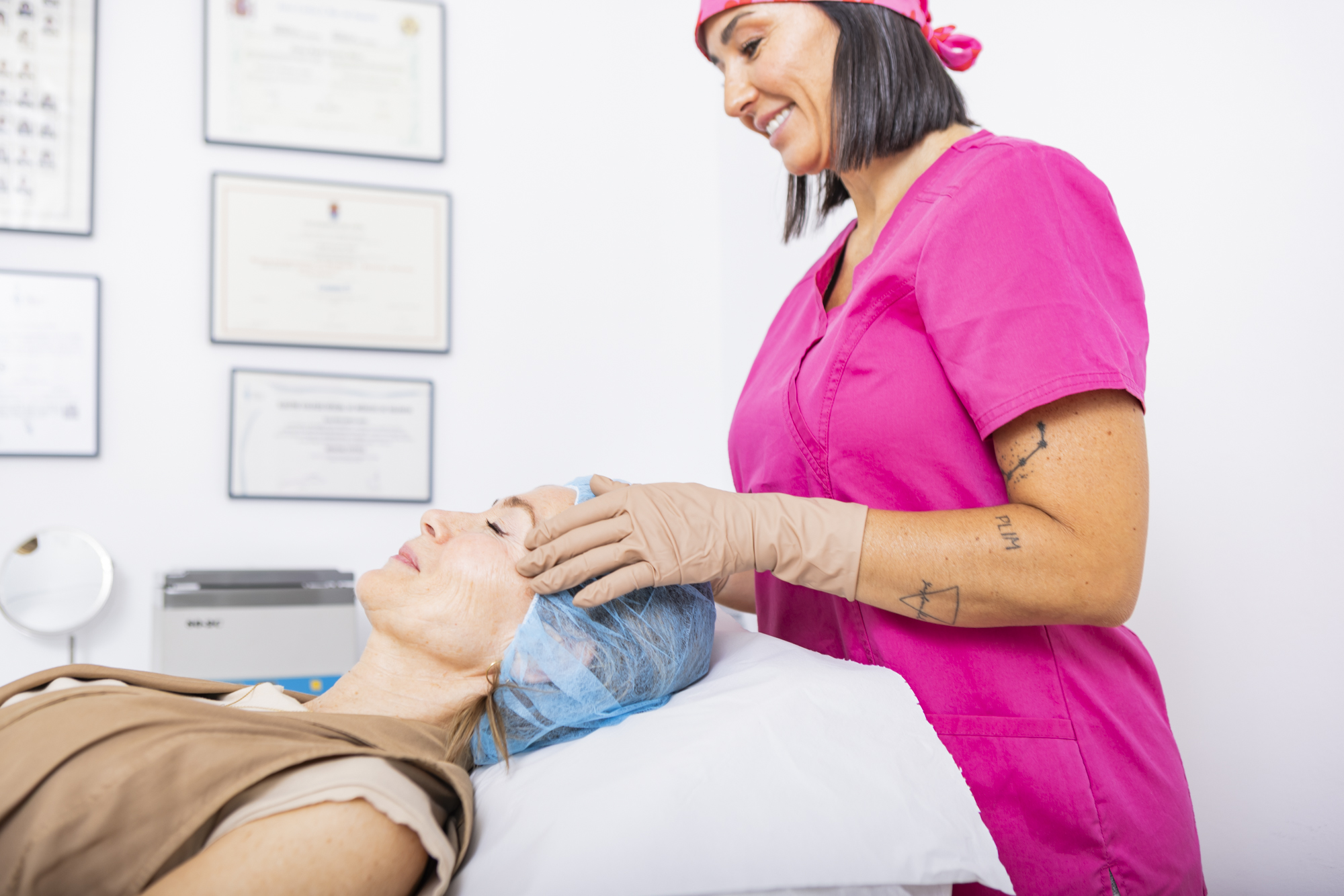
The doctor applies the acid solution to previously cleansed and degreased skin. A sensation of heat or itching occurs for a few minutes. The acid is then neutralized and a soothing, moisturizing product is applied. The session lasts between 20 and 45 minutes.
-
For superficial peels, the usual protocol is 4-6 sessions every 2-4 weeks. Medium peels are usually done in 1-3 sessions spaced 4-6 weeks apart. The doctor will design the protocol according to the therapeutic goal.
When is a chemical peel recommended?
A chemical peel is especially indicated in autumn and winter, since exfoliated skin is more sensitive to solar radiation. However, very superficial peels can be done at any time of the year with adequate sun protection.
It is suitable for people with spots, acne, dull or uneven skin, signs of mild-to-moderate ageing, or as a maintenance treatment for skin quality. It is not indicated during pregnancy or on skin with active infection.
Frequently asked questions
-
A sensation of heat, stinging or itching occurs during application of the acid, which lasts a few minutes and disappears with neutralization. It is not a painful treatment, but it can be intense during those minutes.
-
It depends on the depth of the peel. Superficial peels have minimal recovery (slight redness 24-48 h, fine flaking 2-4 days). Medium peels require 5-7 days of visible flaking and avoiding sun exposure.
-
With superficial peels, practically yes. With deeper peels there is a period of visible flaking lasting several days during which it may be uncomfortable to appear in public without makeup. It is important to plan for this.
-
Low-depth peels are safer on darker phototypes. More aggressive acids carry a higher risk of post-inflammatory hyperpigmentation on darker skin. The doctor will choose the safest type of peel for your phototype.
-
It is contraindicated during pregnancy and breastfeeding, in the presence of active cold sores, skin infection, very sensitive or reactive skin, and in months of high sun exposure when adequate sun protection cannot be guaranteed.